
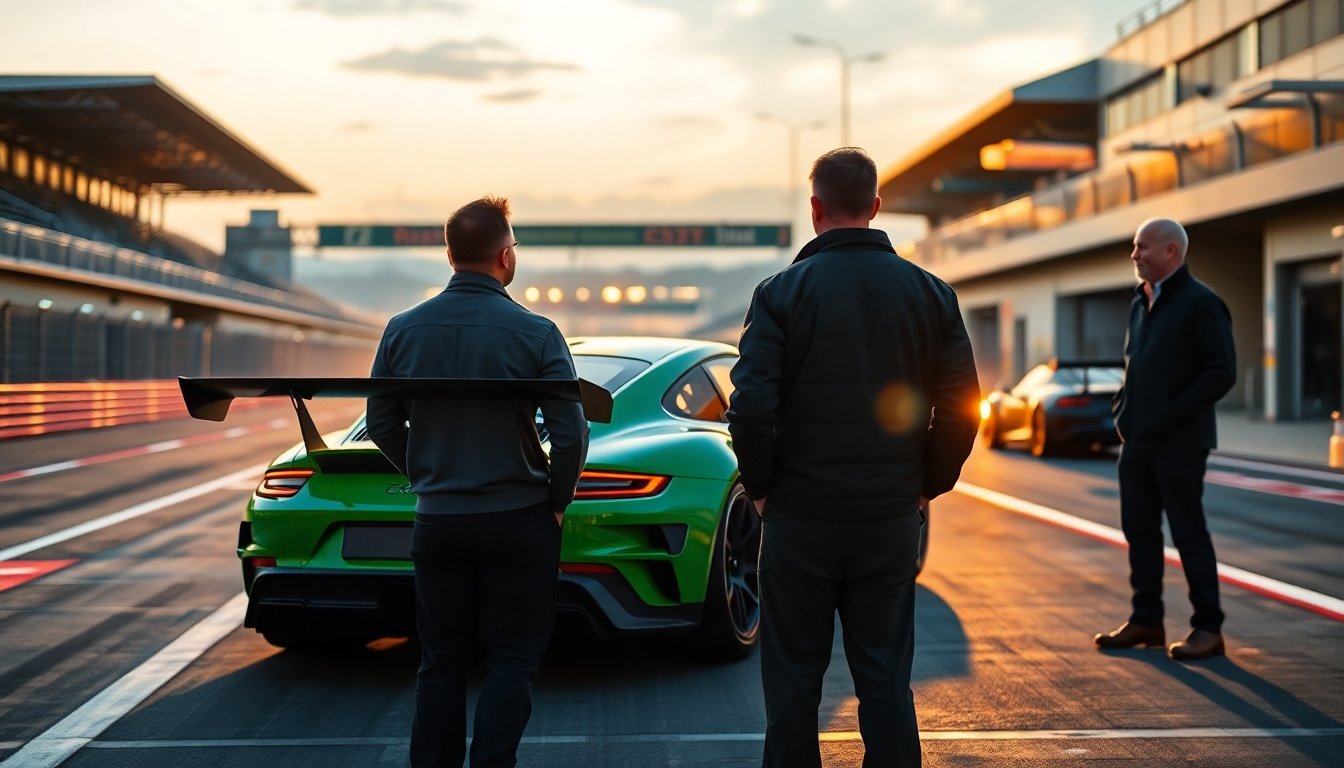
The start of the DTM season at the Red Bull Ring delivered an unwelcome headline: the Lamborghini Temerario GT3 arrived on the grid well behind its rivals and quickly became the story of the weekend. What began as a highly anticipated replacement for the successful Huracán programme turned into an exercise in damage limitation for factory partners and customer teams. Even the top marque driver ended the race with a striking deficit — Mirko Bortolotti finished 16th and was 36.082 seconds adrift after 37 laps — a margin that underlines how far the new car sat off the pace despite the presence of Balance of Performance (BoP) measures meant to equalise competitors.
The Temerario is a clean-sheet design from Sant’Agata Bolognese, replacing the Huracán’s naturally aspirated V10 with a twin-turbo V8 and representing Lamborghini’s first fully in-house GT3 effort. Reliability has been the only consistently positive note so far: the car finished long-distance races at Sebring and Le Castellet without major mechanical failures. Yet the performance shortfall was obvious in testing and on race day, prompting paddock nicknames and serious concern among teams such as Grasser Racing and Abt Sportsline. The car reportedly reached teams late in development and was handed over without a robust baseline set-up, compounding the on-track woes.
Technical shortcomings on track
Race telemetry and driver feedback point to several recurring faults: poor mechanical grip, weak corner entry behaviour, and inconsistent stopping performance under braking. Drivers describe a car that resists turn-in and lacks the suspension-generated traction needed for quick lap times. Electronic systems such as ABS and traction control are not yet fully dialled, which amplifies instability under race conditions. Tyre performance was another complication—Spielberg’s long straights and high-speed sections tend to mask some handling deficiencies, while unusually hot track temperatures and the new DTM tyre compound, which reaches operating window rapidly, masked and revealed different problems at different times.
Regulatory and upgrade constraints
Even if engineers find solutions, the path to recovery is narrow. The DTM enforces tight testing limits and the FIA controls homologation, leading to an effective development freeze once a car is certified. In practical terms, a significant mid-season overhaul is almost impossible. An Evo update — the common route to rescue a troubled model — is generally only permitted after two years, which in this programme’s timeline points to 2028 as the earliest window for a major technical reset. That regulatory framework leaves teams facing a season where fixes must be incremental and heavily constrained by the rulebook.
Why BoP can’t fix everything
Many in the paddock hoped that BoP adjustments could close the gap, but the Temerario is already close to minimum weight and has had ride height trimmed as far as practical. Adding turbo pressure could raise mid- and top-speed figures, but any such gain would likely translate into heavier braking zones and only marginal net lap-time improvement. In short, adjustments through the Balance of Performance system may blunt some deficits but will not cure core issues tied to suspension behavior, mechanical grip, and baseline aerodynamic characteristics.
Organisational fractures and championship risk
Beyond engineering, the programme has been affected by personnel churn and blurred responsibilities. The Lamborghini motorsport group in Sant’Agata has seen leadership moves — a former motorsport chief departed amid internal reviews, technical leads shifted roles into the wider Audi Group, and a new head took up duties at the beginning of April while still assessing the situation. That transition period appears to have left teams managing on their own. The implications reach beyond corporate pride: customer outfits depend on competitive results to secure sponsors, and DTM itself risks a smaller grid if a major manufacturer cuts back. With Mercedes-AMG and Lamborghini carrying significant shares of the field, any weakening of Lamborghini’s commitment would be meaningful for the series.
Possible paths forward
Faced with a constricted development horizon, pragmatic options exist. One proposal favoured by several insiders is a temporary retreat: run the proven Huracán GT3 for the 2026 season while engineers refine the Temerario in the background, then reintroduce the new car when it is genuinely race-ready. That would be a short-term embarrassment but could prevent a season-long public failure and protect customer teams. Alternatively, Lamborghini could try to grind out incremental improvements within the limits of testing windows and homologation rules, though that risks turning a fixable launch into a protracted reputation problem. Either way, the clock and the rulebook are the true opponents now — not just the other GT3 manufacturers.


