
Argomenti trattati
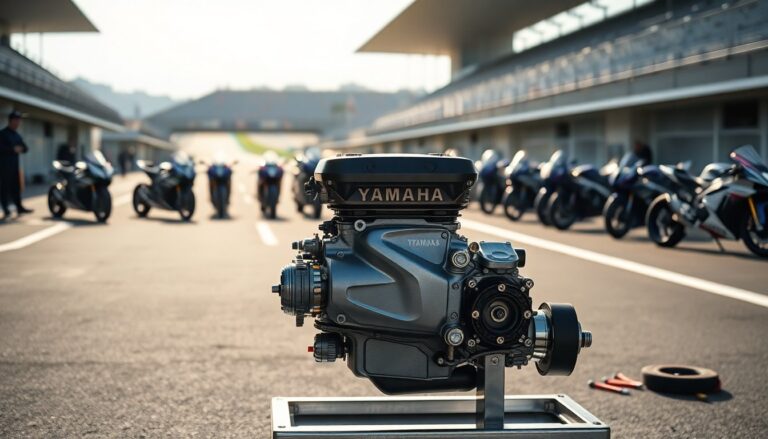
In a significant development for MotoGP fans, Yamaha has officially retired its renowned inline-four M1 engine, a model that has played a pivotal role in securing eight riders’ championships since its introduction in 2002. This decision follows a challenging season for Yamaha, which concluded at the bottom of the manufacturers’ standings. The last victory for the M1 occurred in 2025, marking the conclusion of an era for this iconic engine.
As Yamaha embarks on a new chapter, the company plans to unveil a V4 engine, which has undergone extensive development and testing throughout the year. This engine is set to make its racing debut in the 2026 season, with Augusto Fernandez slated to pilot it in forthcoming competitions. Recent tests were conducted last month in Valencia, showcasing the brand’s commitment to innovation.
The legacy of the inline-four M1
When enthusiasts think of Yamaha and its engines, many will likely recall the remarkable era of 500cc Grand Prix racing, during which the YZR500 V4 two-stroke engine reigned supreme. Iconic riders such as Eddie Lawson and Wayne Rainey secured multiple championships riding this formidable machine. However, the shift to four-stroke racing prompted Yamaha to embrace inline-fours, enhancing rear tire grip through an innovative firing order that replicated the sound of a twin.
This transition marked a significant turning point, leaving the V4 engine dormant for over a decade until the present. Massimo Bartolini, Technical Director at Yamaha Factory Racing, emphasized that the decision to return to a V4 layout is not simply a nostalgic reference but a strategic move to comply with impending 2027 technical regulations. This new configuration is anticipated to drive innovations in bike design and improve aerodynamic efficiency.
Why the transition matters
The significance of this shift is profound. Yamaha’s inline-four M1 engine has achieved over 350 podium finishes and 125 victories in 429 Grand Prix events. Its legacy is marked by five Manufacturer titles, seven Team titles, eight Riders’ Championships, and five MotoGP Triple Crowns, highlighting its importance in Yamaha’s storied history.
Why has Yamaha decided to make this change? Some speculate it is an effort to retain star rider Fabio Quartararo beyond the next season. However, the situation is more complex. Yamaha has faced ongoing challenges with its inline-four engine configuration, which have been recognized in the racing community. Jack Miller, an experienced racer with various brands, pointed out that despite adjustments to the fuel tank position, weight distribution remains a critical issue, leading to excessive strain on the front tires.
Challenges and expectations with the V4 engine
Transitioning to a new V4 configuration
Transitioning to a V4 configuration aims to tackle foundational challenges in motorcycle design. The new engine layout facilitates improved weight distribution, enhancing handling, especially during braking maneuvers. By positioning the rear cylinders further back, the overall dynamics of the motorcycle’s performance are expected to significantly improve.
Additionally, the upcoming V4 engine is designed to provide superior acceleration and features a more compact chassis. These enhancements align with current tire and aerodynamic standards, positioning Yamaha to effectively compete in a technologically advanced environment that continually evolves.
A return to Yamaha’s roots
Yamaha’s return to racing roots
For many fans, this transition signifies more than a mere technical adjustment; it marks a revival of the excitement associated with Yamaha’s racing heritage. The sound of the V4 engine, enhanced cornering abilities, and the spirit of the 1980s and 1990s two-stroke era are poised to return. As Yamaha embarks on this new chapter, a sense of anticipation is palpable among fans and competitors alike.
Looking towards the 2026 season, Yamaha’s dedication to innovation and performance through the new V4 engine may signal a renaissance in its MotoGP efforts, rekindling the passion that has long defined its racing legacy.