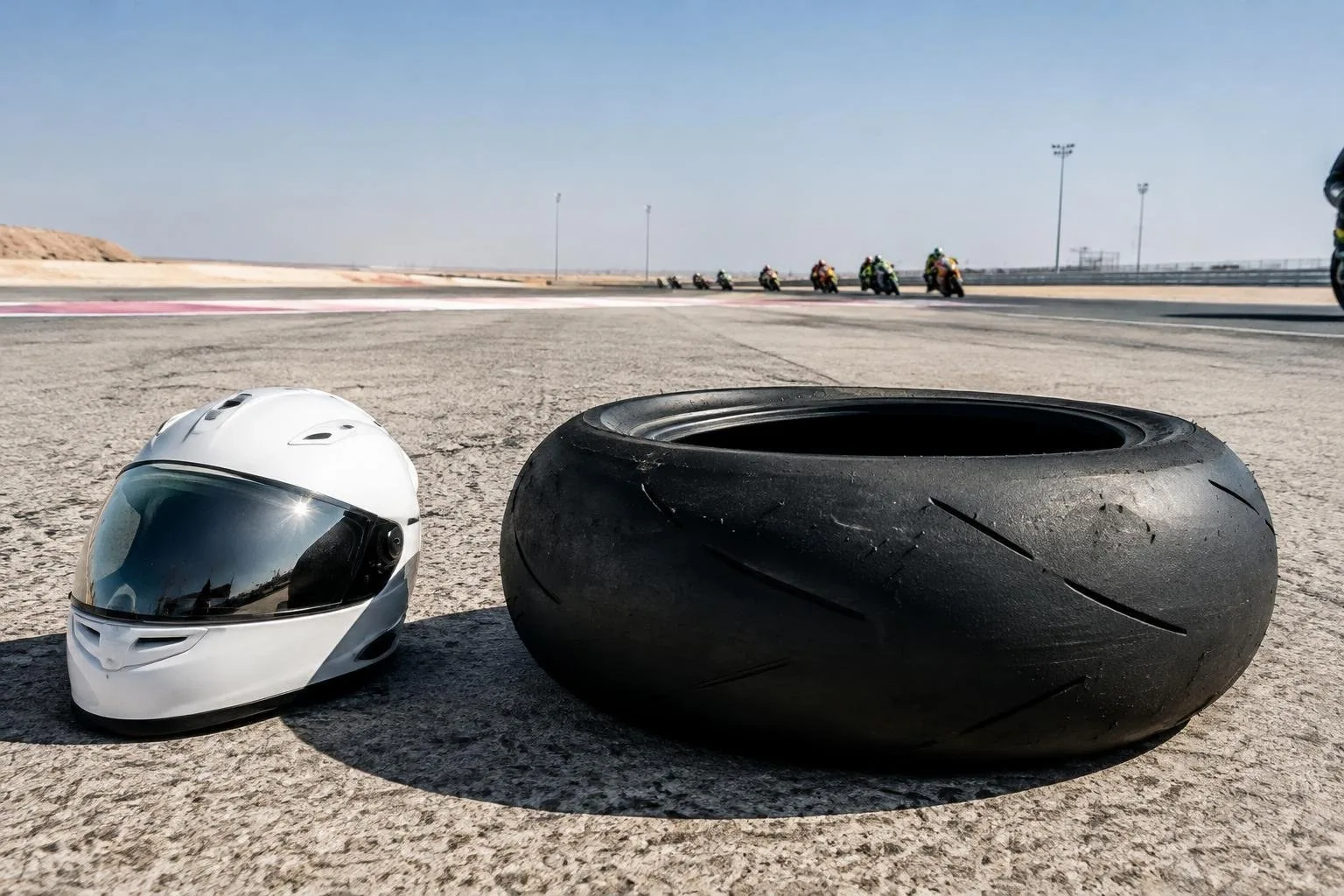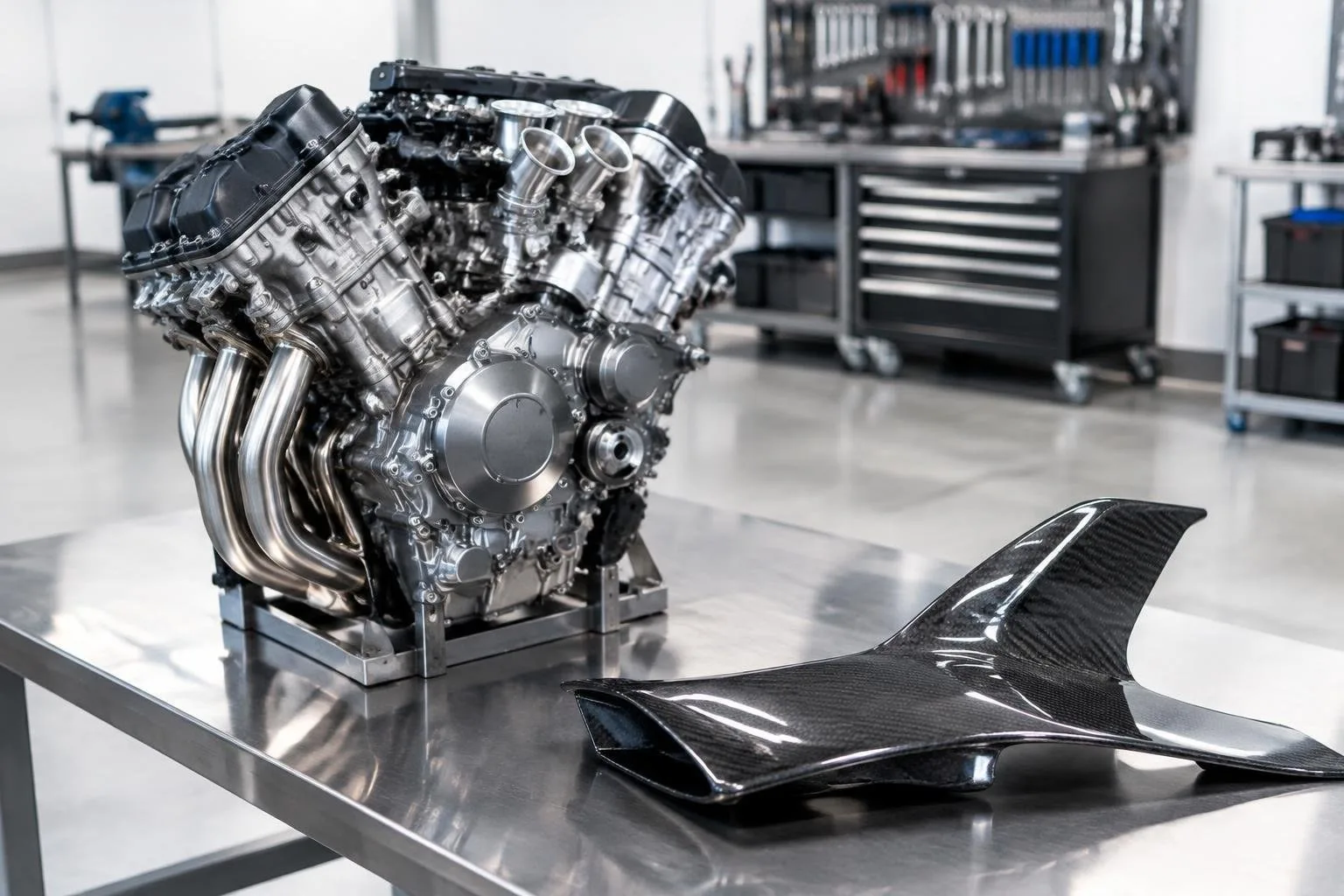
At the recent EICMA exhibition in Milan, CFMoto rolled out its most ambitious two-wheel project to date: the V4SR-RR superbike. The machine blends a factory-built 997 cc V4 powerplant with race-grade components and a novel aerodynamic system that can move its front winglets independently. The reveal signals the Chinese maker’s intention to compete directly with European V4-engine superbikes on both performance and technology fronts.
Engine architecture and chassis package
The heart of the V4SR-RR is a 90-degree V4 developed entirely in-house. It features a MotoGP-style counter-rotating crankshaft and titanium connecting rods supplied by Austrian specialist Pankl. CFMoto claims the engine produces more than 210 hp (over 207 bhp) and can spin up to 15 000 rpm, 500 rpm higher than the prototype shown a year earlier. Weighing roughly 180 kg dry, the bike achieves a power-to-weight ratio that rivals established 1,000 cc superbikes.
Beyond the power unit, the chassis is built around a short cast front frame that bolts directly to the cylinder heads, making the engine a stressed member of the structure. The geometry is fully adjustable, allowing riders to fine-tune rake, trail and swing-arm settings for track or road use. Premium suppliers back the rest of the spec: Öhlins provides the suspension, Brembo Hypure Sport calipers handle the stopping power, Pirelli Diablo Supercorsa SP V4 tyres grip the asphalt, and a full-titanium Akrapovič exhaust finishes the package.
Active aerodynamic winglets
The most eye-catching feature is the pair of independently controlled active winglets mounted on the front fairing. Each winglet is driven by its own servo, allowing asymmetric positioning. According to CFMoto, the system can raise front-wheel downforce by roughly 20 percent just before braking from 160 km/h (100 mph), compared with a fixed-wing configuration. At cruising speeds the elements lie nearly flat, then tilt 10–20° for high-speed stability, and finally swing to 45–90° during hard braking to maximise grip.
When the rider initiates a corner, the winglets may adopt different angles, providing a subtle yaw-inducing force that assists the rider in changing direction. Patent documents describe the mechanism as a “variable-length intake” paired with “finger-follower valve actuation,” underscoring the depth of engineering behind the aero package.
Variants, pricing and market outlook
Beside the standard V4SR-RR, CFMoto displayed a more extreme iteration named the V4SR-RR Carbon Black. Promoted as a track-focused version, the Carbon Black will carry bespoke performance parts and accessories, illustrating the platform’s customization potential. Neither price nor official launch date has been disclosed, and CFMoto notes that final specifications remain subject to confirmation.
If the company can price the bike competitively against European rivals such as Ducati’s Panigale V4 S, which extracts 218 hp from a 1,103 cc engine, the V4SR-RR could reshape the superbike market hierarchy. The combination of a high-revving V4, race-grade components and a first-in-production active-aero system makes the bike more than a showcase – it appears to be a serious contender for riders seeking top-tier performance without the premium price tag.