
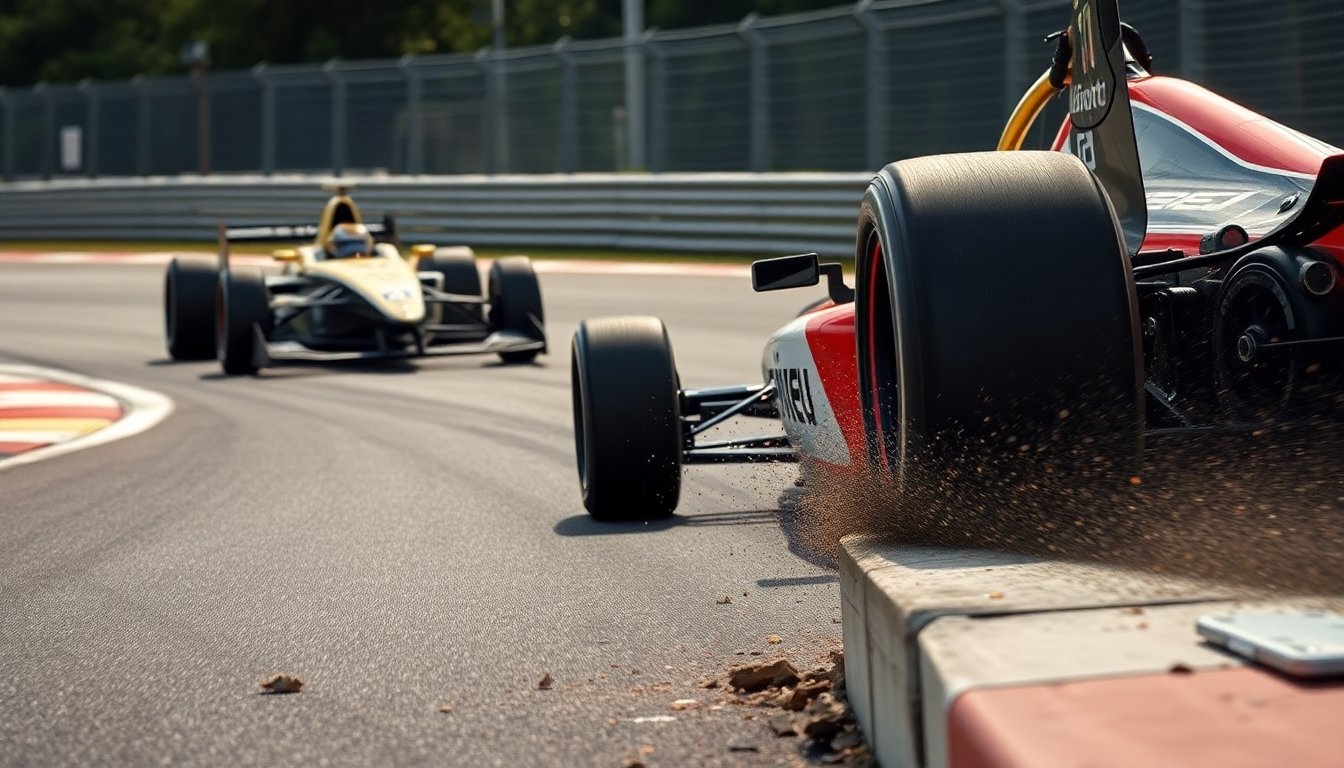
Franco Colapinto’s quick reflexes spared what could have been a dangerous start to the Australian Grand Prix. On the opening lap, Liam lawson’s Racing bulls suddenly bogged down, leaving a tight gap that Colapinto threaded at speed. The Argentine clipped concrete with his right rear tyre but escaped a multi-car pileup — a dramatic moment that exposed an unexpected side-effect of the sport’s new power-unit rulebook.
What changed under the bonnet
The headline technical move for 2026 was the removal of the MGU-H — the shaft-mounted motor-generator that used to electrically spin the turbo. That simplification was intended to cut complexity and weight and to steer the series further toward sustainable fuels and greater electrical deployment. In practice, however, it has reshuffled how engines behave at low exhaust flow, especially off the line.
Without the MGU-H, turbo spool-up depends largely on exhaust energy and smart software rather than direct electrical assistance. Teams have compensated by boosting the MGU-K’s output and allowing larger bursts of electrical torque at launch and restarts. The result: cars can unleash sudden surges of power, but the timing of when that power comes online varies between manufacturers and calibration choices. Those timing differences compress safety margins in the frantic seconds after lights-out, making slow or stalled cars a sharper hazard than before.
How a stall can spiral
At a standing start the turbo has little exhaust to work with. Engine torque, exhaust scavenging and the hybrid system must work in concert to build boost and prevent wheelspin. If a drive interruption occurs — for example, a clutch engagement anomaly or a software sequencing hiccup — the turbo needs time to regain effective boost. During that transient recovery the driveline can deliver erratic torque: from sudden limp-forward behaviour to violent wheelspin when systems snap back. Lawson, who started eighth, described precisely that pattern — an apparent loss of drive followed by delayed recovery and heavy tyre spin. Colapinto, approaching from 16th, had only a hair’s breadth to avoid disaster.
Trade-offs: simpler hardware, trickier transients
There are clear upsides to the new architecture. Fewer components and a lighter hybrid system reduce long-term failure modes and improve steady-state reliability. Bigger electrical deployment windows also enable tactical tools like overtaking boosts and stronger mid-race performance. But the fragility shows up in transients: spool recovery now depends on variable factors such as throttle angle, gear selection, ambient temperature and even new fuel behaviour. Those variables can turn a small calibration error into a hazardous stall or an unpredictable torque spike.
What teams are doing
Engineering teams are reacting on several fronts. Software maps for clutch engagement, torque fill and ignition timing are being reworked to smooth launches. Teams run dyno sequences and software-in-the-loop simulations to reproduce the failure modes seen in Melbourne, and telemetry analysis has become more granular — sub-second traces of engine RPM, turbo boost, battery current and clutch status are being cross-referenced with radio and video to recreate sequences precisely.
Practical countermeasures include revised pre-start checklists, more rigorous tyre and driveline warm-up routines, and conservative launch-maps at circuits with tight first corners or limited run-off. Some teams are experimenting with different clutch materials and faster-acting control electronics to tame transient behaviour. Race crews are rehearsing grid procedures and turbo warm-up drills to shave variability out of the process.
Race control and regulation
The stewards’ decision to penalise Colapinto for an off-grid procedural breach was separate from the mechanical failure, but the incident has prompted broader discussion about start protocols. The FIA has already introduced a brief pre-start buffer in which drivers get a few extra seconds after the final car reaches its slot — an interim fix to give turbos time to spool. If similar events recur, race control may have to consider tougher procedural changes: mandated warm-up procedures, additional telemetry thresholds before releasing the lights sequence, or even staggered starts at high-risk venues.
Supplier and market implications
Manufacturers of turbos, hybrid controls and clutch hardware are under pressure to supply faster-response solutions and robust calibration services. Companies that can provide over-the-air firmware updates, detailed start-sequence analytics and predictive diagnostics will be in demand. Expect a sprint to deliver improved spool characteristics, enhanced torque-fill algorithms and better sensor suites that warn teams of impending anomalies before they become grid-side problems.
Eyewitness accounts and team reactions
Lawson labelled the problem a sudden loss of drive with a subsequent burst of wheelspin as the systems recovered. Alpine’s telemetry suggested a temporary torque drop timed with clutch actuation. Colapinto’s near-miss highlighted the human cost: split-second decisions from both drivers averted worse consequences. Alpine later slapped Colapinto with a stop-and-go for a formation-lap procedural breach, which compounded the day’s drama and underscored how operational slips can amplify technical issues.
What changed under the bonnet
The headline technical move for 2026 was the removal of the MGU-H — the shaft-mounted motor-generator that used to electrically spin the turbo. That simplification was intended to cut complexity and weight and to steer the series further toward sustainable fuels and greater electrical deployment. In practice, however, it has reshuffled how engines behave at low exhaust flow, especially off the line.0


