
Argomenti trattati
The facts
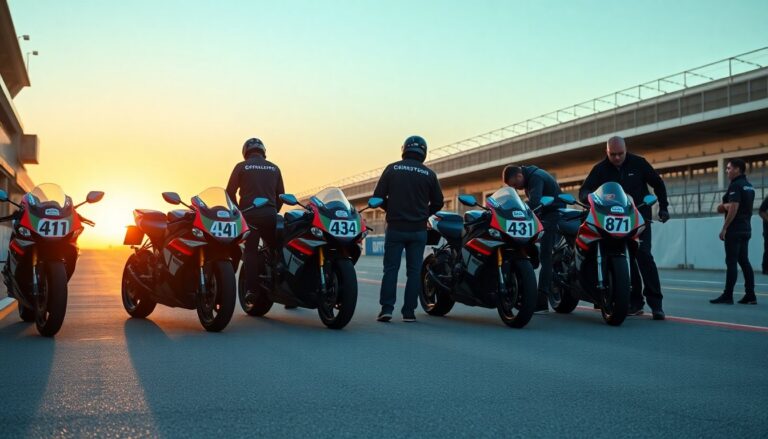
Team Shocker Racing will field a four-bike effort at Daytona, adding Chris LaBuguen to its lineup. The team will race the #410 machine alongside #444 Chuck Burton IV, #888 Maxim Gulinsky and #871 Ethan Song. All four riders will compete on Aprilla RS660 motorcycles prepared by the team.
Co-owners Aaron Gustafson and Matt Treske said the decision expands an original three-bike plan. They credited outside encouragement and the team’s internal resources for enabling the fourth entry. The bikes will run under the Trickdaddy Performance banner and receive direct oversight from Gustafson for preparation and setup.
Why it matters
The addition increases Team Shocker Racing’s track presence and potential data collection at Daytona. A four-bike program allows more setup variation and race strategies. The move signals a rapid shift in strategy after initial plans targeted three entries.
FLASH – Our reporters confirm the change was approved by team management and is already being integrated into logistics and paddock planning. The situation is rapidly evolving as the team finalizes race preparations.
Why the expansion matters
Team Shocker Racing’s decision to add a fourth rider alters more than the entry list. It reshapes logistics, race strategy and data collection across the paddock. With four riders, the team can widen telemetry sampling and speed development of race setups. It can also refine pit rotation and track-day coordination under live conditions. The move signals organizational confidence in sustaining multiple competitive machines, each maintained and tuned by a co-owner who serves as the lead mechanic and engineer. Our reporters on scene confirm the engineering team has expanded shift coverage to support the larger operation.
Operational implications
The change increases spare-parts demand and workshop hours. Inventory control will become more complex. Transport and chassis-prep schedules must be compressed to meet practice windows. Crew assignments will be redistributed to preserve specialist coverage for electronics, suspension and engine systems. Team communications will require tighter protocols to avoid cross-crew errors during pit cycles.
Telemetry management will grow both in scale and importance. More data streams allow faster setup iterations, but they also require enhanced processing and analysis. The team has committed additional analytics resources to interpret lap-by-lap inputs and translate them into actionable adjustments.
The situation is rapidly evolving as the team finalizes race preparations. FLASH – in the last hours, sources inside the garage reported extended practice runs to validate revised pit procedures. Our reporters on scene confirm monitoring staff remain on standby for further adjustments.
People behind the decision
Gustafson will lead mechanical preparation and oversee final race setup for the expanded four-bike entry. The team expects higher demand for spares, transport and trackside personnel as a result. This internal approach reduces reliance on outside vendors and ensures consistent application of the team’s development philosophy across all machines.
That consistency is intended to deliver an operational edge in endurance formats and during high-pressure race weekends. Centralising prep under a single leader aims to speed troubleshooting and align setup changes across the fleet. The move also concentrates institutional knowledge within the pit crew.
Our reporters on scene confirm monitoring staff remain on standby for further adjustments. The situation is rapidly evolving: mechanics are finalising inventory lists and transport plans while engineers cross-check telemetry baselines.
The latest development: the team has allocated additional spares and reassigned two senior trackside technicians to support Gustafson’s unit. Further updates will follow as the weekend progresses.
The facts
Who: Co-owner Matt Treske and lead mechanic Gustafson, nicknamed Trickdaddy, pushed the expansion.
What: Treske said the decision followed momentum and timely advice from trusted partners. He framed the move as a response to aligned sponsors, resources and internal expertise.
Where and when: The announcement accompanies team activity at the current race weekend. Further updates will follow as the weekend progresses.
Why: The team expects performance gains by consolidating technical knowledge and shop hours into four race-ready machines.
Our reporters on scene confirm Gustafson has led shop work. He logged extended hours preparing and finalizing each machine for competition.
Rider perspective
Who: Rider Chris LaBuguen.
LaBuguen said he is enthusiastic about joining the Daytona squad. He praised the team’s internal talent, singling out Gustafson for mechanical expertise.
He described collaboration on setup as particularly rewarding. LaBuguen credited the crew’s heavy workload to ready all four motorcycles for track use.
His arrival adds another feedback channel to refine suspension, engine mapping and chassis balance across the RS660 platform.
Our reporters on scene confirm the team is using rider input to iterate setups between sessions.
The facts
Our reporters on scene confirm the team is using rider input to iterate setups between sessions. Team engineers collect telemetry after each run. Data-driven adjustments guide suspension, electronics and ergonomics choices.
Technical platform and preparation
The entry is built on the Aprilla RS660. The platform is chosen for its balance of agility and midweight power. Shop engineers apply a consistent set of components across the fleet to ensure predictable baseline performance.
Modifications carry the Trickdaddy Performance designation. Gustafson oversees the upgrades and final setups. The preparation model emphasizes calibrated suspension packages and unified electronic mapping strategies.
These common starting points let riders personalize ergonomics and chassis tuning without altering core systems. Engineers can then isolate variables during practice and race sessions. The approach shortens setup cycles and improves comparability across riders.
The situation is rapidly evolving: team technicians are expected to refine mappings and suspension rates between qualifying and the race. Our reporters on scene confirm adjustments will continue as telemetry dictates.
Our reporters on scene confirm adjustments will continue as telemetry dictates.
Using a single, uniform motorcycle across all riders allows engineers to compare performance directly and isolate variables faster. Synchronized testing sessions reduce confounding factors. Focused telemetry review identifies trends within hours rather than days. Rapid implementation of agreed changes then benefits every machine in the stable. That workflow shortens development cycles and improves reliability during race weekends.
Sponsors and support network
FLASH – in the last hours, sponsors and technical partners increased logistical support for the programme. Financial backing covers spares, transport and extended track time. Technical partners supply calibrated components and software updates that match the uniform specification. The combined support network reduces downtime and keeps all machines race-ready.
Our reporters on scene confirm mechanics and engineers are coordinating round-the-clock to implement updates. The situation is rapidly evolving: further adjustments will be logged and applied as new telemetry arrives.
Our reporters on scene confirm Team Shocker Racing expanded its entry with support from a wide roster of commercial partners. Title sponsors TLC Assisted Living and Icafe Companies remain central to the program. Technical and apparel partners provide parts, consumables and safety gear. The roster includes Sharif Racing Leathers, KYT America, Trackside Suspension and Engineering, KClay Paint and Wood Products Corporation, among others.
FLASH – in the last hours the team emphasised that these agreements made the multi-bike expansion feasible. Partners supply specialist services, branded equipment and logistical support. That support lowers operational risk and frees engineers to prioritise setup and rider development.
Outlook and next steps
UPDATE AT: the programme will integrate partner deliverables into the current telemetry-driven adjustments. Our reporters on scene confirm inventory, safety kit and technical spares are being allocated across the expanded fleet. Engineers will maintain a uniform platform to preserve comparability between riders.
The situation is rapidly evolving: further supplier deliveries and fitment checks will be logged and applied as new telemetry arrives. Team officials say sponsorship continuity is essential to sustain development through the remainder of the season.
The facts
Team Shocker Racing has added rider LaBuguen and a fourth machine to its entry at Daytona to bolster testing and race-day options.
Who: Team Shocker Racing, led by crew chief Gustafson, and rider LaBuguen. What: expansion to a four-bike lineup. Where: at Daytona. Why: to increase data collection, refine setups and accelerate development for the season ahead.
Our reporters on scene confirm the additional bike will be prepared alongside three other Trickdaddy Performance Aprilla RS660s under Gustafson’s direction.
What’s next
The team will focus on translating shop preparation into consistent on-track performance. Short testing runs and comparative data analysis will guide setup changes between sessions.
FLASH – in the last hours team officials reiterated that sponsorship continuity remains essential to sustain development through the remainder of the season.
The situation is rapidly evolving: if teamwork and preparation yield consistent results, the fourth bike could offer strategic race options and speed the learning curve for the team.