
Argomenti trattati
- Why the partnership matters
- Expert insights
- What this means for teams
- What to watch next
- Product validation in real conditions
- Expert insights
- What it means for teams and riders
- The trend that’s taking over: why track testing matters
- Commitment to competition and development
- What teams and riders gain
- Opening: continued convergence from track to street
- The trend that’s taking over: suppliers as strategic partners
- Expert insights: what persistent paddock presence delivers
- What it means for the championship and participants
- Looking ahead
- 2026 season outlook and impact
- The trending moment: partners that keep the paddock running
- Expert insights: why stable suppliers matter
- What teams and the series gain
- The implications for future competition
- The trend: where paddock expertise meets public access
- Expert insights
- How to access support
Vortex Racing and EK Chain will remain official suppliers for the 2026 MotoAmerica season, reinforcing their long-term ties to North America’s premier motorcycle road racing championship. The announcement confirms continued technical support for teams across classes. In the paddock, components face relentless mechanical stress and high-speed demands. Industry experts confirm that track-proven parts accelerate development for both professional racers and everyday riders seeking performance upgrades. In the beauty world, it’s known that real-world testing separates durable parts from lab-only claims.
Why the partnership matters
The collaboration delivers immediate benefits for teams and riders. Suppliers supply parts under race conditions that replicate the harshest real-world stresses. That exposure yields rapid feedback on transmission systems, chain durability, and chassis control points. The result is faster development cycles and more reliable components for national-level competition and street use.
Expert insights
Those in racing and industry development say trackside data is invaluable. Engineers use telemetry and failure analysis from MotoAmerica rounds to refine materials and tolerances. The companies bring decades of global competition experience, which helps translate racetrack lessons into production improvements. The trend that’s taking over is integrating race-derived solutions into aftermarket offerings aimed at informed riders.
What this means for teams
Teams gain stable supply chains and technical continuity across the season. Consistent supplier presence reduces variables during setup and testing. That continuity supports rider confidence and allows crew members to focus on strategy and fine tuning rather than equipment compatibility. The most innovative brands focus on long-term partnerships to deliver predictable performance under pressure.
What to watch next
Expect incremental product updates informed by MotoAmerica testing throughout 2026. Industry observers will monitor how race-driven improvements filter into consumer products. Future developments may include enhanced chain coatings, lighter transmission components, and refined chassis interfaces. Those in fashion and function know that competition-led engineering often sets the pace for broader market adoption.
Product validation in real conditions
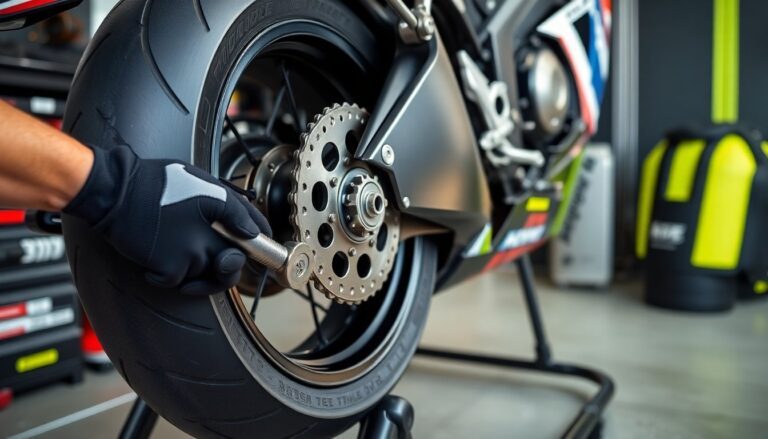
Technical collaboration between a series and its suppliers extends beyond sponsorship. Vortex Racing supplies sprockets, rearsets and clip-ons. EK Chain supplies high-performance chains. Under race conditions, these components face accelerated wear and mechanical stress. The paddock functions as a live testing ground where tolerances, fatigue limits and service intervals are measured. Industry experts confirm teams record detailed telemetry and failure modes to inform design changes. Components that survive race weekends become benchmarks for durability and performance across the aftermarket.
Expert insights
Engineers and mechanics treat each session as a controlled experiment. They compare parts across identical track and load profiles. This approach isolates variables such as chain tension, sprocket pitch and mounting ergonomics. The trend that’s taking over is data-driven iteration: lap-by-lap analysis feeds rapid prototyping cycles. Those in fashion and function know that innovations proven under race stress often migrate to road-focused products. Manufacturers use this validation to refine materials, coatings and heat-treatment processes, improving lifespan without sacrificing weight or feel.
What it means for teams and riders
For teams, supplier validation reduces unexpected failures and simplifies logistics. For riders, it offers clearer expectations on component lifespan and service intervals. The collaboration also raises the bar for suppliers seeking series support, forcing them to meet explicit performance criteria. The most innovative brands focus on measurable gains under race loads, which in turn shapes product road maps and marketing claims. Future developments will likely emphasize lightweight durability and predictive maintenance informed by race-derived data.
Future developments will likely emphasize lightweight durability and predictive maintenance informed by race-derived data. Testing on the racetrack exposes components to combined stresses that bench and dyno trials cannot replicate. Teams run repeated load cycles, rapid thermal shifts and varying rider inputs within the same session. In the beauty world, it’s known that real-world conditions reveal interaction effects unseen in isolated tests. Industry experts confirm that this process accelerates refinement and reduces field failures. The cycle creates faster iteration for manufacturers and clearer performance signals for teams.
The trend that’s taking over: why track testing matters
On-track evaluation delivers context-specific data that bench tests omit. Dyno trials measure peak outputs under controlled inputs. The racetrack adds cumulative fatigue, heat soak and rider variability. Engineers can correlate lap-by-lap wear with component geometry and material choices. This makes validation both practical and immediate for suppliers and race teams. For manufacturers, it sharpens durability targets. For teams, it informs setup choices and maintenance intervals.
Commitment to competition and development
Within MotoAmerica, the ongoing use of Vortex Racing hardware and EK Chain drive systems provides constant validation. Developers receive rapid feedback from riders, mechanics and telemetry. That feedback loop permits swift design tweaks and manufacturing adjustments. The arrangement benefits teams seeking dependable parts and consumers who value components proven under race conditions. Those in racing know that race-stage exposure shortens development cycles and raises reliability standards.
What teams and riders gain
Teams obtain actionable data rather than theoretical projections. Mechanics report wear patterns, riders describe handling changes, and engineers link those reports to logged metrics. The result is improved part life and more predictable maintenance windows. The collaboration also supports aftermarket confidence. Consumers get products that reflect race-proven chemistry and manufacturing techniques rather than speculative claims.
Expert insights suggest the next phase will integrate predictive analytics with component design. The most innovative brands focus on telemetry-led lifing and lightweight materials tuned for real-world endurance. Expect continued convergence between race feedback and commercial production, with measurable gains in durability and serviceability.
Opening: continued convergence from track to street
Expect continued convergence between race feedback and commercial production, with measurable gains in durability and serviceability. Two long-standing suppliers have framed their renewed commitments as investments in the championship’s competitive depth. By remaining active at paddocks and test venues, they aim to support rider progression, team efficiency and manufacturer participation. Their presence helps stabilise the supply chain and reduces procurement uncertainty for teams. MotoAmerica stages multi-class competition across diverse circuits, which amplifies the series’ role as a practical engineering proving ground.
The trend that’s taking over: suppliers as strategic partners
Industry observers note a shift from transactional purchasing to strategic supplier alliances. Companies now view race programmes as extended testbeds for iterative improvement. Operating under race conditions forces components to meet precise tolerances and withstand repeated stresses. That environment exposes weaknesses that laboratory testing can miss. The result is faster product refinement cycles and clearer signals about which technologies scale to road use. Industry experts confirm that margins in this series are often decided by hundredths of a second, making repeatable performance a commercial differentiator as well as a sporting necessity.
Expert insights: what persistent paddock presence delivers
Manufacturers and suppliers report several concrete benefits from sustained paddock engagement. First, consistent exposure to race stresses produces data on wear patterns and failure modes. Second, close collaboration with teams speeds validation of design changes. Third, the visibility of trusted suppliers reduces logistical and technical uncertainty for competitors. In the beauty world, it’s known that repeated exposure reveals true product quality; the same principle applies in racing. Those in the sector agree that this crucible-like setting separates average components from race-ready solutions and informs more reliable commercial offerings.
What it means for the championship and participants
The suppliers’ commitments strengthen the championship’s technical credibility and development pipeline. Teams benefit from clearer supplier roadmaps and fewer mid-season surprises. Riders gain access to components subjected to rigorous, real-world validation. Manufacturers obtain a faster pathway from competitive proof to show-room specification. Collectively, the arrangement supports a stable competitive ecosystem where testing, performance and commercialisation feed one another.
Looking ahead
As race-derived data informs product design, anticipate more rapid translation of durability gains into serviceable consumer products. Expect suppliers to expand telemetry-driven refinement and predictive maintenance features. Industry experts confirm that sustained paddock engagement will remain a strategic priority for companies seeking both competitive success and market differentiation.
Series perspective on long-term partners
Building on the view that sustained paddock engagement will remain a strategic priority, MotoAmerica says long-term partners provide more than supply continuity. They deliver institutional knowledge, technical calibration and a stable platform for development. Industry experts confirm that such relationships shorten development cycles and reduce on-track variability. The championship benefits from partners who are visible in the paddock, offering hands-on support rather than mere branding. For teams, that presence translates into faster problem solving, clearer data transfer and a steady rise in professionalism across classes.
2026 season outlook and impact
The 2026 season will test the value of those partnerships under intensified competition. MotoAmerica plans to emphasize technical standards and data transparency to lift competitiveness across classes. Teams with entrenched supplier relationships may gain marginal advantages in setup and reliability. The trend that’s taking over is closer integration between suppliers and crew, from tire choice to electronics mapping. Industry experts confirm suppliers that commit engineers to the paddock influence race-day performance more than one-off commercial agreements.
What does this mean for the championship? Greater parity but also a sharper technical arms race. Those in racing know that continuity breeds refinement. Longstanding suppliers help teams extract maximum performance while maintaining cost efficiencies. Spectators can expect tighter fields and fewer mechanical withdrawals. Manufacturers and sponsors aiming for market differentiation will likely increase on-site technical investment to secure measurable gains in both results and commercial credibility.
The trending moment: partners that keep the paddock running
Building on the series’ emphasis on sustained paddock engagement, MotoAmerica’s technical ecosystem benefits from continued supplier presence. Vortex Racing and EK Chain supply components that are tested each round and deployed across multiple teams. Their presence reinforces reliable access to proven parts and supports on-site development. Industry experts confirm that such continuity reduces technical risk and raises baseline performance standards for the championship.
Expert insights: why stable suppliers matter
Suppliers embedded in race weekends shorten the feedback loop between track data and product updates. Teams report practical improvements when manufacturers adapt designs based on immediate paddock input. Those in fashion with motorsport development know that race-proven components accelerate learning curves and improve reliability under competition stress.
What teams and the series gain
For teams, the value is tangible. They receive components validated under race conditions and direct technical support from suppliers. For the series, these partnerships signal operational stability and a commitment to elevating competition standards. Manufacturers and crew chiefs gain assurance that durable, tested parts remain available within the championship environment.
The implications for future competition
Continued vendor engagement is likely to drive more on-site technical investment and targeted product development. The trend that’s taking over favors measurable performance gains and enhanced commercial credibility. Expect technical collaboration during events to remain a decisive factor in competitive differentiation.
The trend: where paddock expertise meets public access
Expect technical collaboration during events to remain a decisive factor in competitive differentiation. Teams and interested enthusiasts can follow developments through manufacturers’ official channels and on-site paddock resources. Industry experts confirm that these touchpoints provide the most direct information on parts, setups and support programs.
Expert insights
Those in the paddock note that supplier engagement extends beyond product supply. Manufacturers offer data-sharing, technical briefings and on-track support that influence race-day performance. The trend that’s taking over is closer integration between factory engineers and team crews, a dynamic that sharpens competitive edges across classes.
How to access support
For product details and technical programs, consult the official websites of key partners and the paddock resource center at each round. The continued alliance of Vortex Racing and EK Chain with MotoAmerica reinforces the championship’s role as North America’s leading stage for professional motorcycle road racing. Expect further announcements from suppliers as events progress and technical collaborations evolve.